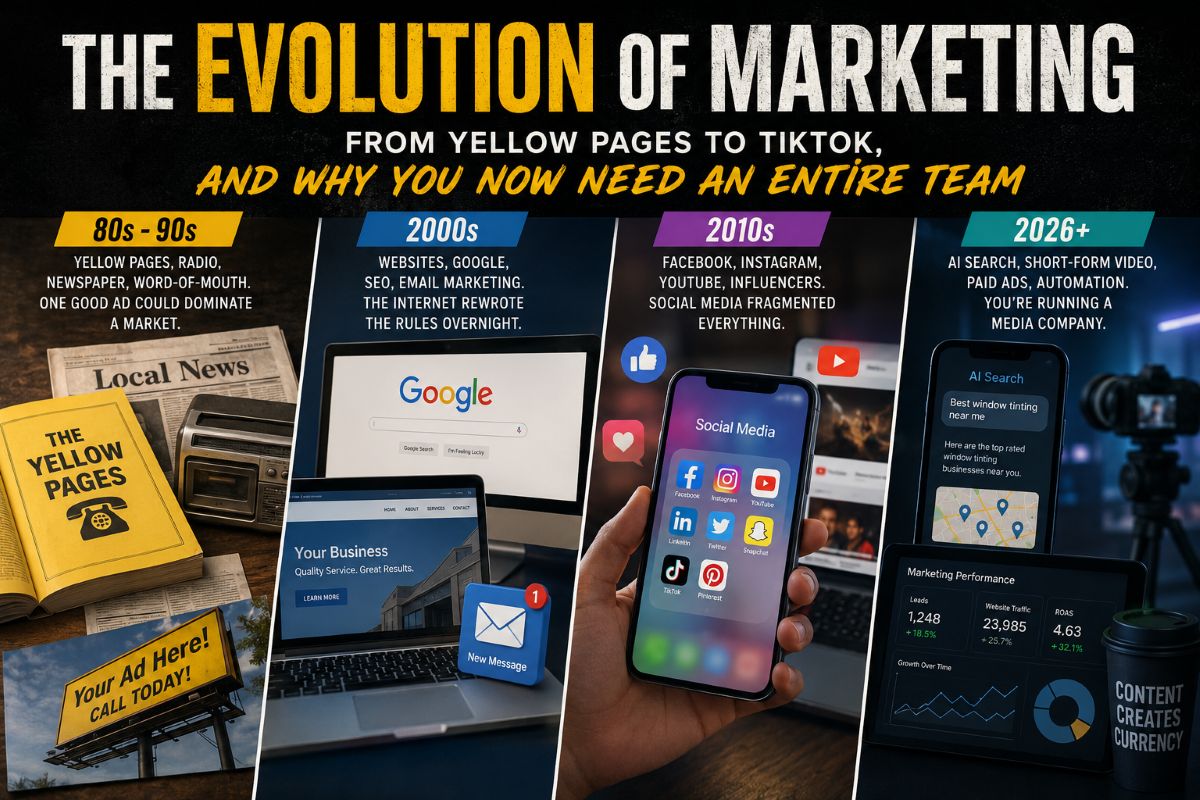
For decades, the marketing playbook was simple. Run the ad. Promote the product. Beat the competitor on price. Repeat. And for a long time, it worked — because customers didn’t have many other options. They watched the same three channels, read the same newspapers, and bought from whoever showed up in front of them often enough.
That world is gone. And the businesses still operating like it isn’t are losing ground every single day to competitors who figured out a different game entirely.
The shift didn’t happen overnight. It built quietly over years, accelerated by social media, on-demand entertainment, and a generation of consumers who grew up with more choices than any generation before them. What emerged on the other side is a marketplace where attention is the scarcest resource on the planet — and where the businesses earning it aren’t the ones with the biggest budgets. They’re the ones creating experiences people genuinely want to talk about.
“Attention isn’t bought anymore. It’s earned. And the currency is experience.”
What Traditional Marketing Got Wrong
Traditional marketing was always built around the business — what it sells, what it costs, why it’s better. The customer was the target, not the center. Marketing meant interrupting someone’s day with a message they didn’t ask for and hoping enough of them converted to justify the spend. It was a numbers game dressed up as strategy.
The problem isn’t that advertising stopped working. It’s that consumers evolved faster than most marketing departments did. People learned to skip ads, ignore banners, and tune out anything that felt like a pitch. Trust in traditional advertising has been declining for years. Referrals from real people — friends, reviews, organic social content — now carry more weight than any paid placement. The transaction-first model didn’t just become less effective. It became a competitive liability.
Businesses that kept running the old playbook while their customers quietly checked out are now wondering why foot traffic is down, why ad spend isn’t converting, and why competitors with smaller budgets are outpacing them. The answer almost always comes back to the same thing: they were selling, when their customers wanted to be served.
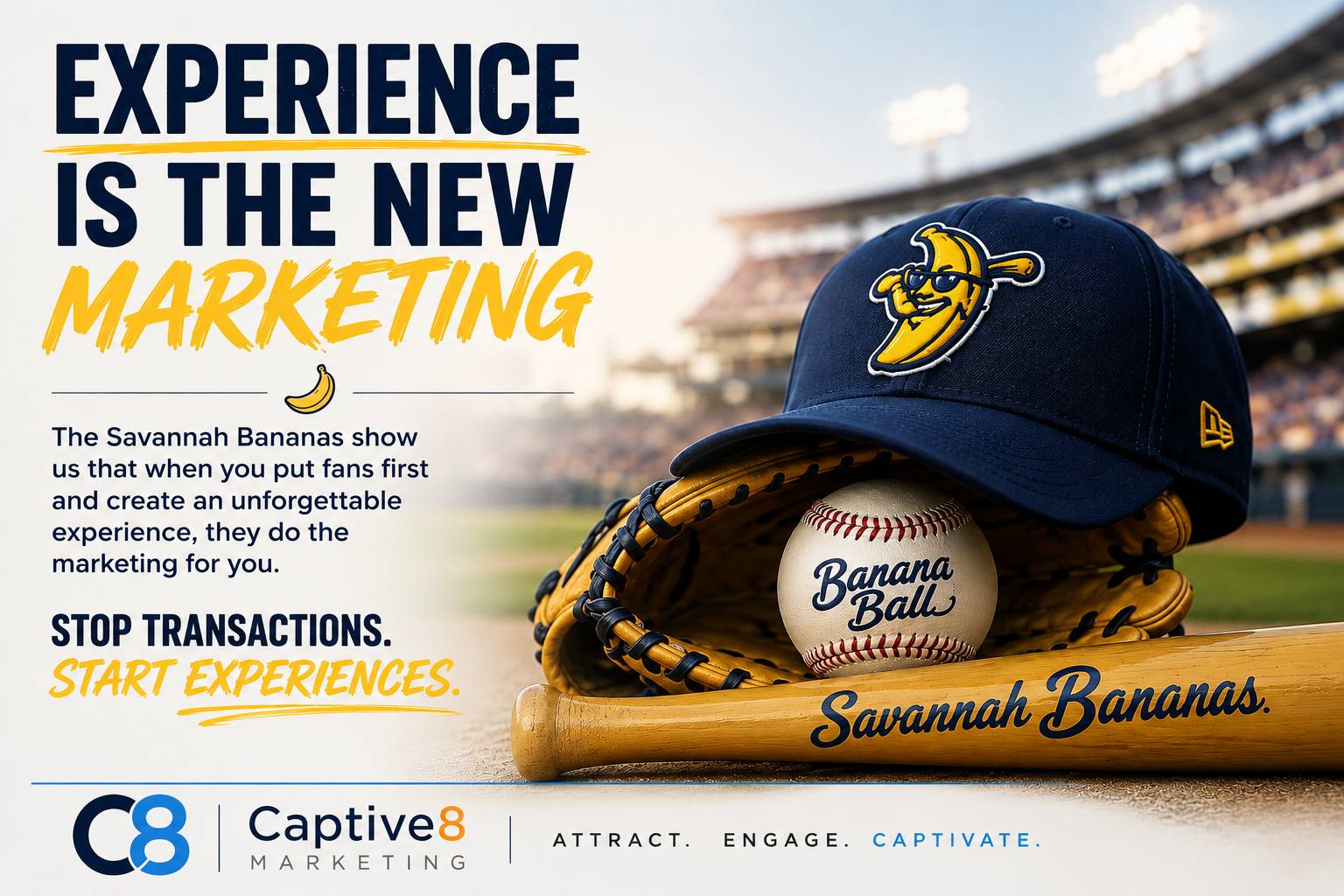
The Savannah Bananas Didn’t Change Baseball. They Changed the Experience.
If you want to see what experience-first marketing looks like at full throttle, look at the Savannah Bananas. They took a sport that had been bleeding younger audiences for years and turned it into one of the most talked-about entertainment brands in the country — not by changing the game, but by changing everything around it.
Players dance between pitches. Fans are part of the show from the moment they walk in. Every inning is designed for energy. Every moment is built to be shareable. And the result is that people who couldn’t care less about baseball are buying tickets and posting videos. That’s not marketing in the traditional sense. That’s culture-building. And the distinction matters more than most businesses realize.
The Bananas understood something that most brands are still catching up to: you’re not just competing against other businesses in your category. You’re competing against Netflix, social media, concerts, and a hundred other things your customer could be doing with their time and money. The question is never just “why should they choose us over the competitor?” The real question is, “why should they care at all?”
Old Model
-
Interrupt the customer with a message. Compete on price and specs. Hope the ad converts. Repeat.
Experience Model
-
Build something worth talking about. Make the customer the story. Let loyalty do the marketing for you.
Loyalty Is the Outcome of Experience
Here’s what the data and the instincts agree on: loyalty doesn’t come from a punch card or a discount. It comes from how someone felt the last time they interacted with your business. It comes from being remembered. From being treated like a person, not a transaction. From walking away with a story worth telling. When businesses put the customer experience at the center of everything — not as a department or a campaign, but as a core operating philosophy — the marketing almost takes care of itself. Customers post. They refer. They come back. They defend the brand in comment sections they didn’t have to visit. They become advocates before you ever ask them to be, because the experience gave them something to advocate for. Apple didn’t build loyalty by running more ads than competitors. Disney doesn’t retain fans through promotional pricing. The businesses synonymous with loyalty are the ones that invested obsessively in how their customers feel at every single touchpoint — from the first interaction to the last. The product matters, but the experience surrounding it is what creates attachment. Small and mid-size businesses often assume this principle belongs to brands with massive budgets. It doesn’t. Some of the most powerful experiences are built with intention, not dollars. A local business that knows its regulars by name, that remembers preferences, that communicates like a human instead of a template — that business has a loyalty advantage that no ad budget can replicate. The playing field isn’t money. It’s mindset.“When the experience is right, customers stop being buyers. They become part of the story.”The businesses growing fastest right now aren’t outspending anyone. They’re out-experiencing them. They’ve figured out that in a world where every product has a competitor and every ad has a skip button, the only truly defensible advantage is how you make people feel. That’s not a soft concept. It’s the hardest edge in modern marketing — and the most durable one. At Captive8 Marketing, this is the conversation we have with business owners every day. Because the gap between where most businesses are and where their customers wish they were isn’t a budget problem. It’s a perspective problem. And once you shift the perspective, everything else starts to move.